Snakes: The Silent Slitherers
The important "nature-police" that keep our ecosystem in balance.
Type
Reptile
Smell with
Their Tongue
Role
Rodent Control
Fact
No Eyelids!
Safety First, Explorer!
Before we learn about snakes, here is the #1 Explorer Rule: Never touch a snake. Most snakes in Pennington just want to be left alone and will slither away as soon as they feel you coming. They are very important because they eat rats, mice, and frogs, keeping the forest healthy!
Tasting the Air
Have you ever seen a snake flick its tongue out? It’s not being rude! Snakes use their tongues to smell. Their tongue picks up tiny scent particles in the air and brings them back to a special organ in the roof of their mouth (called the Jacobson’s Organ). This tells the snake if there is a mouse nearby or if a predator is coming.
Pennington's Green Neighbors
We have two famous green snakes in our area.
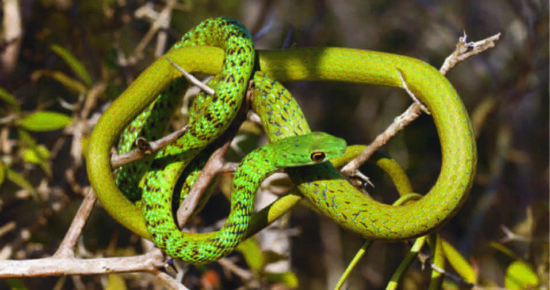
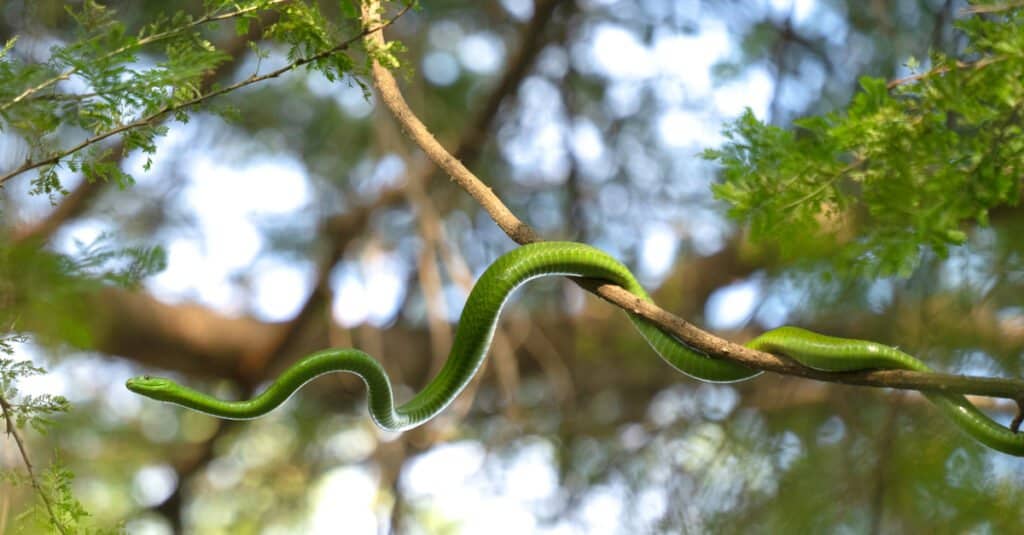
- The Spotted Bush Snake: This is a harmless snake that loves to climb walls and trees to find geckos. It has little black spots on its front half. They are very good for your garden!
- The Green Mamba: These are much larger and live high up in the thick coastal forest. They are very shy and rarely come into gardens. They are venomous, which is why we always watch all snakes from a safe distance.
🔊 Listen: The Hiss of a Snake
(Player Placeholder: Warning hiss sound)
Stretchy Jaws
Snakes don't have a chin bone like we do. Their lower jaw is connected by a very stretchy ligament. This allows them to open their mouths wide enough to swallow food that is much bigger than their own head! They don't chew their food; they swallow it whole and let their strong stomach acids do all the work.
Hearing Vibrations
Snakes don't have ears on the outside of their bodies, but they aren't deaf! They feel vibrations through their jawbones. When you walk heavily on the ground, the snake feels the "thump thump" and knows you are coming. They also never close their eyes because they don't have eyelids!

Hey Explorer, did you know?
Snakes are cold-blooded, which means they need the sun to warm up their bodies before they can hunt for breakfast! This is why you see them sunbathing on rocks.